Personalized Kids Books: How AI Makes Your Child the Hero (2026)
A dad and CTO on what personalized kids books really mean in 2026 — and how AI makes the hero actually look like your child.
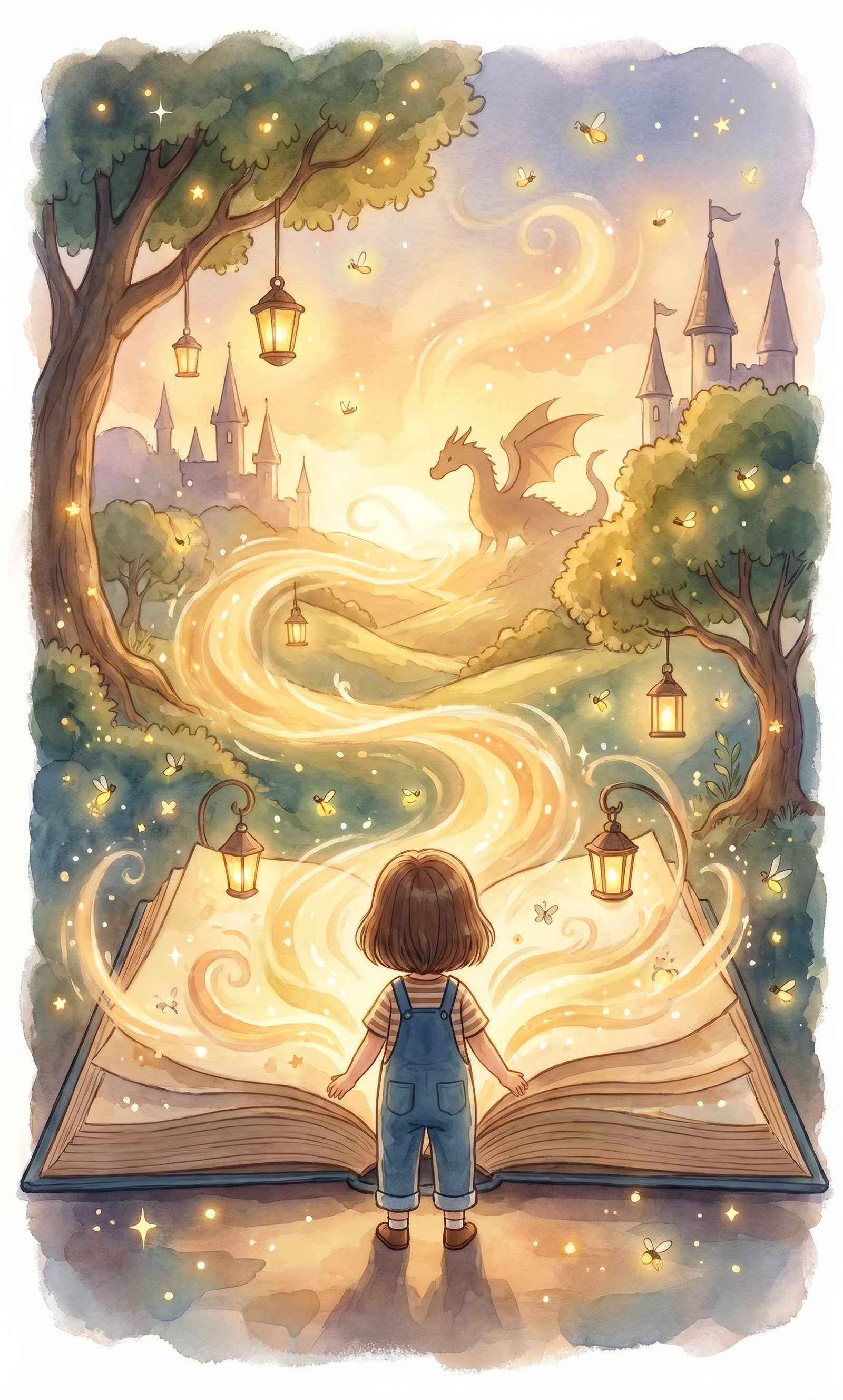
Personalized kids books in 2026: a CTO and dad reads 400 bedtime stories so you don't have to
My youngest is four. She has strong opinions about dragons, an even stronger opinion about bedtime, and zero patience for books where the "personalized" part is literally just her name printed once on page 1. I know because I've read a lot of them to her.
That's a big part of why I ended up building Magnificent Worlds — an AI platform that turns your child's photo into a 24-page illustrated storybook where they are actually the hero on every page, not just the dedication. This post is the honest, opinionated version of what I've learned about personalized kids books after two years of building one, and roughly 1,400 bedtimes of reading them.
If you came here to skip ahead: yes, the category has changed enormously since 2023. No, most of the older "personalized" books are not what you think they are. And yes, AI now makes something genuinely new possible — when it's done carefully.
What you'll find on this page
- What "personalized" actually means in a kids book
- How an AI personalized book actually gets made
- Why character consistency over 24 pages is the hard part
- How Magnificent Worlds compares to Librio, Hurra Helden, Wonderbly and the rest
- Which ages and themes work
- FAQ — the questions parents actually ask me
What "personalized" used to mean — and what it can mean now
For a long time, a personalized children's book meant one of two things.
Option one: a template book where the printer swapped in your child's name on a few pages. The dragon was always the same dragon. The hero was always the same generic illustrated kid. Your daughter's hair could be black, brown, blonde, or red — the cartoon kid in the book had whatever hair the illustrator drew years before she was born.
Option two: a slightly fancier version where you picked from 6–8 preset avatars (skin tone, hair colour, glasses, freckles) and the printer mixed and matched. Better, but still not your child. Just a closer approximation.
I'm not knocking either approach. Companies like Librio and Hurra Helden have done beautiful work in that lane for years, and a thoughtful template book is still a lovely gift. But neither one is what most parents picture when they hear the phrase personalized story book in 2026. They picture: "the book is about my actual kid".
That's the gap the new wave of AI personalized children's books — including the one I built — is filling.
How an AI personalized book actually gets made
This is the section where I put my CTO hat on, because most blog posts about AI for kids are written by people who have never trained a model. I'd rather just tell you what's actually happening when you upload a photo.
Roughly: you give the system a photo of your child. The system extracts a representation of that child — not the photo itself, but a learned identity vector that captures the recognisable features (face shape, hair, eyes, skin tone). That vector then gets fed into an image generation model — a diffusion model — alongside the description of every scene in the story.
So instead of "draw a child holding a lantern in a forest", the model is told something closer to "draw this specific child holding a lantern in a forest, in painterly storybook style, soft edges, page 7 of a 24-page sequence with these earlier scenes for continuity."
The reason this works in 2026 and didn't really work in 2022 is that the underlying image models got dramatically better at two things at once: respecting an identity reference, and respecting a style reference. Until both worked, you got either a great-looking kid in a terrible style, or a beautiful storybook page with a child who looked like a stranger.
Why character consistency across 24 pages is the hard part
If you only generate one image, the problem is easy. The hard part — the part that took my team most of those two years — is keeping the child looking like the same child across all 24 pages of the book, while the scenes and lighting and outfits and angles change wildly.
Most early AI image tools fail at this in a really specific way: page 3 looks like your daughter, page 9 looks like a vaguely similar kid, page 17 looks like a completely different child you've never met. To a parent reading at 7:30pm, that is jarring. Kids notice immediately. My eldest noticed within two pages on an early prototype and said "that one isn't me". She was right.
What actually fixes it is a stack of techniques you don't need to remember the names of: identity-preserving fine-tunes, reference-based generation, careful prompt scaffolding per page, and a quality check that re-rolls a page if the identity drift is over a threshold. The short version: the book gets checked, page by page, before it ever reaches you.
If you want to see what 24 consistent pages looks like, the easiest way is to make one. The whole process takes a few minutes and you can preview the book before ordering anything physical.
How Magnificent Worlds compares to the older personalized-book brands
I want to be fair here because some of these companies have been doing this since before AI image generation existed, and they deserve respect.
| Brand | Approach | Photo upload | Art styles | Languages | Price (single book) |
|---|---|---|---|---|---|
| Magnificent Worlds | AI from your child's photo | Yes | Multiple painterly styles | 20+ | ~€29.99 |
| Librio | Avatar builder + template | No | One illustrator style | 10+ | €29.90+ |
| Hurra Helden | Avatar builder + template | No | One illustrator style | 5+ | €34.95+ |
| Wonderbly | Name-based templates | Sometimes | Per-book illustrator | English-first | £24.99+ |
| Hooray Heroes | Avatar builder + template | No | One illustrator style | 10+ | €29.90+ |
The honest take: if you want a book where the hero looks like your actual child rather than an approximation of your child, AI-based generation is the only category that delivers it right now. If you want a single specific illustrator's style and you're happy with avatars, the older brands are excellent. I've bought their books too.
For the deeper side-by-side, I wrote a longer comparison post with all eight major brands scored honestly. For now, the table above captures the structural difference.
Which ages and themes actually work
A personalized kids book is not one thing — it changes shape a lot from ages 1 to 8.
1–2 years old
At this age the book is more for the parent than the child, honestly. The child is interacting with the object — pointing, gnawing, recognising themselves in a picture and getting delighted. The story matters less than the visual recognition. Keep the text minimal and the images large and warm. Board format if you can.
3–4 years old
This is the sweet spot. Attention spans get long enough for a real arc — a problem, a quest, a resolution — and self-recognition is intense. My four-year-old wanted to know why "she" had a different bow in the book than her real bow. Specificity matters at this age.
5–7 years old
The book can carry more story, more humour, and bigger emotional beats. Some kids start reading it themselves around 6. The personalization shifts from "look, it's me" to "I would do that in this situation". Themes like first day of school, a younger sibling, moving house, or coping with a worry all land at this age.
8+
Honestly, this is where most personalized books struggle. The kids are getting close to chapter books and a 24-page picture book starts to feel young. Some still love it — especially as a keepsake — but I'd buy a chapter book by 8 unless the personalized one is for a special occasion.
What I'd actually pay for in a personalized book
If I were buying one as a gift right now, this is my checklist — written as the dad rather than the founder.
- Does the hero actually look like the child? Not "kind of". Not "skin tone close enough". Look like them.
- Does the hero look like the same child on page 1 and page 24? Test by flipping through the preview.
- Is the art warm and painterly, not creepy? AI books can land in the uncanny valley if the team didn't tune carefully. Look at faces.
- Is the story actually a story? A problem, a journey, an ending. Not just 24 pages of "and then the child did X with Y".
- Is the print quality real? A premium personalized story book costs €30+ — it should feel like it.
- Is there a language I'd actually read it in? Reading aloud in your own language matters more than getting the "right" language for the gift.
I built Magnificent Worlds to hit all six of those, which means I'm biased — but the checklist works for evaluating any brand, including mine. If you want to see how it scores, the easiest test is to start a book and just look at the preview before paying for anything.
FAQ
What is the best personalized kids book in 2026?
"Best" depends on what you want. If you want the hero to actually resemble your child from a photo and you want multiple art styles to choose from, AI-based platforms like Magnificent Worlds lead the category. If you prefer a single warm illustrator style and don't mind avatar-based personalization, Librio and Hurra Helden are excellent in that lane.
Do AI personalized children's books look creepy?
They can — that's a real risk if the team hasn't tuned the model. The cure is style: a painterly, illustrated storybook aesthetic forgives small imperfections in a way that photoreal generation never does. We deliberately never generate photoreal child faces; the output is always a painted illustration.
How long does a personalized story book take to arrive?
Digital preview is instant — typically a few minutes after you upload the photo. Physical print and shipping varies by country, but expect 7–14 days for most of Europe and 10–18 days for the US.
Is uploading my child's photo safe?
It should be — but ask. The photo is only used to generate the book; it should not be stored, sold, or used to train any model that other people will benefit from. We don't, and any reputable platform will say the same in their privacy policy.
What ages are personalized books for?
Roughly 1 to 8, with the sweet spot at 3–6. Younger kids enjoy the recognition more than the story; older kids start to want chapter books. I'd buy one as a gift any time from birth through second grade.
Can I make a book for siblings together?
Yes — if the platform supports multiple characters, you can have two (or three) heroes in the same story. This is a popular choice for a new-baby announcement gift to an older sibling.
Related reading
- First birthday gift ideas: 23 gifts parents actually keep
- Hooray Heroes alternative: AI-personalized kids books in 2026
- Personalized baby book: what to look for (and what to avoid)
Written by Albert, CTO and co-founder of Magnificent Worlds — the AI platform that turns your child into the hero of their own storybook. If you want to make one for a kid in your life, start here.
Keep reading
Personalized Books for Toddlers: What Actually Works at 1, 2, and 3 (2026)
A dad of three on which personalized books for toddlers actually work at 1, 2 and 3.
Best Personalized Children's Books: 8 Options Compared (2026)
8 personalized children's books compared honestly — by the dad and CTO who built one of them.
Personalized Baby Book: What to Look For (and What to Avoid)
A dad and tech CTO on what actually matters in a personalized baby book — and the marketing tricks to ignore.
Make your child the hero of their own story.
A personalised hardcover storybook, ready in minutes.
Start your story